 |
|
Quality Parameters |
|
|
|
Quality Parameters |
This document provides general information on water quality parameters available through the BASIN www site and discusses why these parameters are significant measures of the health of the stream system. Specific information about how these parameters vary in the Boulder Creek Watershed is available here.
TEMPERATURE
Temperature of water is a very important factor for aquatic life. It controls the rate of metabolic and reproductive activities, and determines which fish species can survive. Temperature also affects the concentration of dissolved oxygen and can influence the activity of bacteria and toxic chemicals in water.
Measurement of Temperature
Temperature is measured using a thermometer, and is recorded in either degrees Celsius (° C) or degrees Fahrenheit (° F). While air temperatures reported on television and the newspaper in the U.S. are given in degrees Fahrenheit, scientists usually record temperatures in Celsius, because this is the unit designated by the International System of Units. To convert from ° F to ° C, use this equation:
T° C = [T° F - 32° F] * 5° C / 9° F
For example, the freezing temperature of water is 32° F; this translates to 0° C. The boiling temperature of water is 212° F, or 100° C.
Factors Affecting Temperature

Riparian Vegetation
Riparian vegetation, or trees and plants growing along the banks of a river or creek, provide shade, preventing the sun from heating up the water. If the sun shines directly on water, the water can warm up very quickly, and to very high temperatures.
Flow Rate
During dry seasons, there is less water in a river or creek, and it flows more slowly. This allows the water to warm up more quickly, and to warmer temperatures.
Paved Surfaces

As business and housing developments are built, previously open lands are covered with buildings and pavement. This covered area is called "impermeable surface." Less rain water is soaked into the ground, and more of it runs over land into streams during storms. This runoff also moves faster into the stream than would natural runoff because it travels through straight concrete or plastic storm drain pipes. This increased volume and velocity of runoff scours the stream channel and widens it. During dry weather between storms, the channels have a very shallow flow. These wide, shallow streams heat up much more quickly than do more natural narrow, deep ones.
Additionally, black surfaces, like many streets and parking lots, absorb heat, and rainwater moving over these surfaces during storm events becomes warmer.
Industrial Discharge

Some industries use water as a coolant during processing. This water is sometimes discharged to a stream or lake. When this water is discharged to a creek, it is much warmer than the water in the creek, and the temperature of the creek becomes higher. This phenomenon is called thermal pollution. This can cause the period of ice cover on the water to be shortened, and can increase the metabolic rate of plants and animals, producing an increase in oxygen demand.
Sewage Outflow
Water discharged from treatment plants is warm, because of the wastewater entering the plant (coming from our homes and businesses) is warm. This is another form of thermal pollution.
Water Quality Standards and Other Criteria Regarding Temperature

Colorado Department of Public Health and Environment-Water Quality Control Division (CDPHE-WQCD) regulations (5 CCR 1002-31) state that waters classifed as "Class 1 Cold Water Aquatic Life" should never have temperatures exceeding 20° C, while waters classified as "Class 1 Warm Water Aquatic Life" should never have temperatures exceeding 30° C (http://www.cdphe.state.co.us/cdphereg.asp#wqreg). These regulations also state that temperature for these classes shall maintain a normal pattern of diurnal and seasonal fluctuations with no abrupt changes and shall have no increases in temperature of a magnitude, rate, and duration deemed harmful to the resident aquatic life. Generally, a maximum 3° C increase over a minimum of a 4-hr period, lasting 12 hrs maximum, is deemed acceptable.
Temperature preferences among aquatic species vary widely, but all species tolerate slow, seasonal changes better than rapid changes.
Other Information about Temperature
Respiration of organisms is temperature-related; respiration rates can increase by 10% or more per 1° C temperature rise. Therefore, increased temperature not only reduces oxygen availability, but also increases oxygen demand, which can add to physiological stress of organisms (Giller and Malmqvist, 1998).
SPECIFIC CONDUCTANCE (SC)
Specific Conductance (SC) is a measure of how well water can conduct an electrical current for a unit length and unit cross-section at a certain temperature. SC is usually measured using a 1 centimeter cell. Conductance is the reciprocal, or opposite, of resistance (which means how well something can resist an electrical current). That is,
conductance = 1 / resistance
Resistance is reported in ohms, so the unit of conductance was originally ohm spelled backwards – "mho." More recently, however, the name "siemen" has been used to match the term used by the International System of Units. So both "ohm" and "siemen" are sometimes seen in water quality reports. One siemen is equal to one mho. Because SC in natural waters is usually much less than 1 siemen/cm, SC is usually reported in microsiemens (1/1000 siemen) per centimeter, or mS/cm. SC is affected by temperature, so for consistency SC values are converted to what they would be at room temperature (25° C).
Electrical current is conducted in water by the movement of ions. Conductivity increases with increasing amount and mobility of ions. These ions, which come from the breakdown of compounds (mostly inorganic), conduct electricity because they are negatively or positively charged when dissolved in water. Therefore, SC is an indirect measure of the presence of dissolved solids such as chloride, nitrate, sulfate, phosphate, sodium, magnesium, calcium, and iron. (However, there is no universal relation between total dissolved solids and specific conductance.)
Factors Affecting SC
Geology and soil in the watershed
Some rock and soil release ions very easily when water flows over them; for example, if acidic water flows over rocks containing calcite (CaCO3), such as calcareous shales, calcium (Ca2+) and carbonate (CO32-) ions will dissolve into the water. Therefore, SC will increase. However, some rocks, such as quartz (SiO2), are very resistant, and don't dissolve easily when water flows over them (and even if SiO2 does dissolve, it is not conductive). SC of waters draining areas where the geology only consists of quartz or other resistant rocks will be low (unless other factors are involved).

Acid mine drainage
Drainage from operating and abandoned mine sites can contribute iron, sulfate, copper, cadmium, arsenic, and/or other constituents if minerals containing these constituents are present and are exposed to air and water. This increase in ions will increase the SC.
 Agricultural
runoff
Runoff from farms can contain fertilizers, which contain phosphate and nitrate. In addition, irrigation return flow can leach salts from the soil.
Road runoff

Runoff from roads can contain leaked automobile fluids and salts from chemicals used in road de-icing, such as sodium chloride (NaCl) and magnesium chloride (MgCl2).
Water Quality Standards and Other Criteria Regarding SC
Generally, there aren't regulatory levels for SC. Instead, the concentration of total dissolved solids (TDS) is often regulated. However, SC is an easily-obtained parameter that is an good indicator of the amount of dissolved solids in a water, and thus can be used to detect contaminants in water.
Pure water would theoretically have an SC value of zero µS/cm at 25° C; however, this water is very difficult to produce. Distilled or deionized water has an SC of at least 1 µS/cm. Rain water can have an SC value higher than distilled water, because it dissolves gases from the air and also particles of dust or other airborne material. Sea water has an SC of approximately 50,000 µS/cm, because of the large amount of dissolved salts it contains.
DISSOLVED OXYGEN (DO)
Dissolved Oxygen (DO) is found in microscopic bubbles of oxygen that are mixed in the water and occur between water molecules. Fish "breathe" by absorbing dissolved oxygen through their gills.
Oxygen enters the water by absorption directly from the atmosphere or by aquatic plant and algae photosynthesis. Oxygen is removed from the water by respiration and decomposition of organic matter.
Measurement of DO
Dissolved Oxygen can be measured with an electrode and meter or with field test kits. The electronic meter does not measure oxygen directly; rather, it uses electrodes to measure the partial pressure of oxygen in the water, which is converted to oxygen mass weight concentration. The field test kits (such as a drop bottle, a microburet, or a digital titrator) involve adding a solution of known strength to a treated sample of water from the stream. The amount of solution required to change the color of the sample reflects the concentration of DO in the sample. The amount of oxygen dissolved in water is expressed as a concentration, in milligrams per liter (mg/l) of water.
Dissolved oxygen levels are also often reported in percent saturation. Temperature affects DO concentrations, and calculating the percent saturation will factor out the effect of temperature. The "saturation level" is the maximum concentration of dissolved oxygen that would be present in water at a specific temperature, in the absence of other factors. Scientists have determined the saturation DO level for various temperatures. Saturation levels also vary with elevation. Percent saturation is calculated by dividing the measured dissolved oxygen concentration by the saturation level and multiplying by 100.
This equation is shown as:
% Saturation = (DO / Saturation Level) x 100
Factors Affecting DO
Volume and velocity of water flowing in the water body
In fast-moving streams, rushing water is aerated by bubbles as it churns over rocks and falls down hundreds of tiny waterfalls. These streams, if unpolluted, are usually saturated with oxygen. In slow, stagnant waters, oxygen only enters the top layer of water, and deeper water is often low in DO concentration due to decomposition of organic matter by bacteria that live on or near the bottom of the reservoir.
 Dams
slow water down, and therefore can affect the DO concentration of water downstream.
If water is released from the top of the reservoir, it can be warmer because
the dam has slowed the water, giving it more time to warm up and lose oxygen.
If dams release water from the bottom of a reservoir, this water will be cooler,
but may be low in DO due to decomposition of organic matter by bacteria.

Climate/Season
The colder the water, the more oxygen can be dissolved in the water. Therefore, DO concentrations at one location are usually higher in the winter than in the summer.
During dry seasons, water levels decrease and the flow rate of a river slows down. As the water moves slower, it mixes less with the air, and the DO concentration decreases. During rainy seasons, oxygen concentrations tend to be higher because the rain interacts with oxygen in the air as it falls.
More sunlight and warmer temperatures also bring increased activity levels in plant and animal life; depending on what organisms are present, this may increase or decrease the DO concentration.
 The
type and number of organisms in the water body
During photosynthesis, plants release oxygen into the water. During respiration, plants remove oxygen from the water. Bacteria and fungi use oxygen as they decompose dead organic matter in the stream. The type of organisms present (plant, bacteria, fungi) affect the DO concentration in a water body. If many plants are present, the water can be supersaturated with DO during the day, as photosynthesis occurs. Concentrations of oxygen can decrease significantly during the night, due to respiration. DO concentrations are usually highest in the late afternoon, because photosynthesis has been occurring all day.

Altitude
Oxygen is more easily dissolved into water at low altitudes than at high altitudes, because of higher atmospheric pressure.
Dissolved or suspended solids
Oxygen is more easily dissolved into water with low levels of dissolved or suspended solids. Waters with high amounts of salt, such as the ocean (which contains about 35 grams of salt for each 1000 grams of water) have low concentrations of DO. Freshwater lakes, streams, and tap water generally contain much less salt, so DO concentrations are higher. As the amount of salt in any body of water increases, the amount of dissolved oxygen decreases. An increase in salt concentration due to evaporation of water from an ecosystem tends to reduce the dissolved oxygen available to the ecosystem's inhabitants.
Runoff from roads and other paved surfaces can bring salts and sediments into stream water, increasing the dissolved and suspended solids in the water.
Amount of nutrients in the water
Nutrients are food for algae, and water with high amounts of nutrients can produce algae in large quantities. When these algae die, bacteria decompose them, and use up oxygen. This process is called "eutrophication." DO concentrations can drop too low for fish to breathe, leading to fish kills. However, nutrients can also lead to increased plant growth. This can lead to high DO concentrations during the day as photosynthesis occurs, and low DO concentrations during the night when photosynthesis stops and plants and animals use the oxygen during respiration.
Nitrate and phosphate are nutrients. Nitrate is found in sewage discharge,
fertilizer runoff, and leakage from septic systems. Phosphate is found in fertilizer
and some detergents. 
Organic Wastes
Organic wastes are the remains of any living or once-living organism. Organic wastes that can enter a body of water include leaves, grass clippings, dead plants or animals, animal droppings, and sewage. Organic waste is decomposed by bacteria; these bacteria remove dissolved oxygen from the water when they breathe. If more food (organic waste) is available for the bacteria, more bacteria will grow and use oxygen, and the DO concentration will drop.
Directly downstream from where sewage effluent is discharged to a river, DO content often decreases, because of the increase in growth rate of bacteria that consume the organic matter contained in the effluent. The degree and extent of the DO "sag" depends on the Biological Oxygen Demand (BOD) of the effluent (how much oxygen the effluent can consume) (Giller and Malmqvist, 1998).
Riparian Vegetation
 Shading
tends to lower average summer temperature and reduce the daily duration of higher
temperature. Removing trees reduces shade on the creek, allowing the sun to
warm the water. This can affect DO concentrations in different ways. As mentioned
above, in general, as water temperature increases, DO drops. Also, the bare
soil exposed from removing the tree can erode, increasing the amount of dissolved
and suspended solids in the water. This also leads to a decrease in DO concentrations.
However, direct sunlight, along with increased nutrients can increase the growth
rate of aquatic plants. These plants release oxygen to the water during the
day, but then remove oxygen from the water at night. This can cause DO concentrations
to become very high during the day, then very low during the night.
Groundwater Inflow
The amount of groundwater entering a river or stream can influence oxygen levels. Groundwater usually has low concentrations of DO, but it is also often colder than stream water. Therefore, groundwater may at first lower the DO concentration, but as groundwater cools the stream or river, the ability of the water to hold oxygen improves.
Water Quality Standards and Other Criteria Regarding DO
Colorado Department of Public Health and Environment Water Quality Control Division (CDPHE-WQCD) regulations (5 CCR 1002-31) state that waters to be used for domestic water supply and waters used for recreation (both primary and secondary contact) should not have DO concentrations below 3 milligrams per liter (mg/l) (http://www.cdphe.state.co.us/cdphereg.asp#wqreg).
 (CDPHE-WQCD)
regulations state that waters classifed as "Class 1 Cold Water Aquatic
Life" should not have DO concentrations below 6 mg/l, and not below 7 mg/l
during spawning. Waters classified as "Class 1 Warm Water Aquatic Life"
should not have DO concentrations below 5 mg/l. (These are 1-day minima)
 Very
high DO concentrations can also be harmful to aquatic life. Fish in waters containing
excessive dissolved gases may suffer a condition in which bubbles of oxygen
block the flow of blood through blood vessels, causing death. Abrupt changes
in dissolved oxygen induce stress and subsequently make fish more susceptible
to disease.
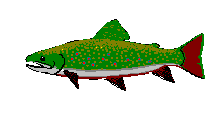
The ideal dissolved oxygen concentration for many fish is between 7 and 9 mg/l; the optimal DO for adult brown trout is 9-12 mg/l. Most fish cannot survive at concentrations below 3 mg/l of dissolved oxygen.
Other Information about DO
 When
dissolved oxygen concentrations drop, major changes in the types and amounts
of aquatic organisms found living in the water can occur. Species that need
high concentrations of dissolved oxygen, such as mayfly nymphs, stonefly nymphs,
caddisfly larvae, pike, trout, and bass will move out or die. They will be replaced
by organisms such as sludge worms, blackfly larvae, and leeches which can tolerate
lower dissolved oxygen concentrations. Waters that have low dissolved oxygen
sometimes smell bad because of waste products produced by organisms that live
in low oxygen environments.
Because of the relationship between temperature, rate of photosynthesis, and DO, fish kills usually occur in late summer just before dawn.
Very low DO concentrations can result in mobilization of trace metals.
A fish that is under stress caused by low oxygen levels in the water is more susceptible to poisoning by insecticides or heavy metals (Caduto, 1990).
pH
pH represents the effective concentration (activity) of hydrogen ions (H+) in water. This concentration could be expressed in the same kind of units as other dissolved species, but H+ concentrations are much smaller than other species in most waters. The activity of hydrogen ions can be expressed most conveniently in logarithmic units. pH is defined as the negative logarithm of the activity of H+ ions:pH = -log [H+]
where [H+] is the concentration of H+ ions in moles per liter (a mole is a unit of measurement, equal to 6.022 x 10^23 atoms). Because H+ ions associate with water molecules to form hydronium (H3O+) ions, pH is often expressed in terms of the concentration of hydronium ions. In pure water at 22° C (72° F), H3O+ and hydroxyl (OH-) ions exist in equal quantities; the concentration of each is 1.0 x 10⁻⁷ moles per liter (mol/L). Therefore, pH of pure water = -log (1.0 x 10⁻⁷) = -(-7.00) = 7.00. Because pH is defined as –log [H+], pH decreases as [H+] increases (which will happen if acid is added to the water). Since pH is a log scale based on 10, the pH changes by 1 for every power of 10 change in [H+]. A solution of pH 3 has an H+ concentration 10 times that of a solution of pH 4. The pH scale ranges from 0 to 14. However, pH values less than 0 and greater than 14 have been observed in very rare concentrated solutions.
Measurement of pH
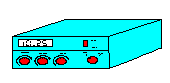
The pH of water can be measured with a pH meter, which is an electronic device with a probe. The probe contains an acidic aqueous solution enclosed by a glass membrane that allows migration of H+ ions. The electrical potential of the glass electrode depends on the difference in [H+] between the reference solution and the solution into which the electrode is dipped. pH can also be measured with pH paper or by adding a reagent (indicator solution) to the water sample and recording the color change.
Factors Affecting pH:
The concentration of carbon dioxide in the water
Carbon dioxide (CO2) enters a water body from a variety of sources, including the atmosphere, runoff from land, release from bacteria in the water, and respiration by aquatic organisms. This dissolved CO2 forms a weak acid. Natural, unpolluted rainwater can be as acidic as pH 5.6, because it absorbs CO2 as it falls through the air. Because plants take in CO2 during the day and release it during the night, pH levels in water can change from daytime to night.
Geology and Soils of the watershed
Acidic and alkaline compounds can be released into water from different types of rock and soil. When calcite (CaCO3) is present, carbonates (HCO3, CO3-2) can be released, increasing the alkalinity of the water, which raises the pH. When sulfide minerals, such as pyrite, or "fool’s gold," (FeS2) are present, water and oxygen interact with the minerals to form sulfuric acid (H2SO4). This can significantly drop the pH of the water. Drainage water from forests and marshes is often slightly acidic, due to the presence of organic acids produced by decaying vegetation.
Drainage from Mine Sites
Mining for gold, silver, and other metals often involves the removal of sulfide minerals buried in the ground. When water flows over or through sulfidic waste rock or tailings exposed at a mine site, this water can become acidic from the formation of sulfuric acid. In the absence of buffering material, such as calcareous rocks, streams that receive drainage from mine sites can have low pH levels.
Air Pollution 
Air pollution from car exhaust and power plant emissions increases the concentrations of nitrogen oxides (NO2, NO3) and sulfur dioxide (SO2) in the air. These pollutants can travel far from their place of origin, and react in the atmosphere to form nitric acid (HNO3) and sulfuric acid (H2SO4). These acids can affect the pH of streams by combining with moisture in the air and falling to the earth as acid rain or snow.
Water Quality Standards and Other Criteria Regarding pH
The U.S. Environmental Protection Agency (U.S. EPA) sets a secondary standard for pH levels in drinking water: the water should be between pH 6.5 and 8.5 (U.S. EPA Office of Water, Drinking Water and Health Advisories; http://www.epa.gov/OST/Tools/dwstds.html). Secondary standards are unenforceable, but recommended, guidelines.
Colorado Department of Public Health and Environment Water Quality Control Division (CDPHE-WQCD) regulations (5 CCR 1002-31) state that waters to be used for domestic water supply should have pH values between 5.0 and 9.0 (http://www.cdphe.state.co.us/cdphereg.asp#wqreg). Waters used for primary recreation (including such activities as swimming, rafting, and kayaking) should have pH values between 6.5 and 9.0. Waters classified as "Class 1 Cold Water Aquatic Life" or "Class 1 Warm Water Aquatic Life" should have pH values between 6.5 and 9.0.
Very high ( greater than 9.5) or very low (less than 4.5) pH values are unsuitable
for most aquatic organisms. Young fish and immature stages of aquatic insects
are extremely sensitive to pH levels below 5 and may die at these low pH values.
High pH levels (9-14) can harm fish by denaturing cellular membranes.
Changes in pH can also affect aquatic life indirectly by altering other aspects of water chemistry. Low pH levels accelerate the release of metals from rocks or sediments in the stream. These metals can affect a fish’s metabolism and the fish’s ability to take water in through the gills, and can kill fish fry.
Other Information about pH
The term "pH" was originally derived from the French term "pouvoir hydrogène," in English, this means "hydrogen power." The term pH is always written with a lower case p and an upper case H.
Total Organic Carbon (TOC):
Organic matter plays a major role in aquatic systems. It affects biogeochemical processes, nutrient cycling, biological availability, chemical transport and interactions. It also has direct implications in the planning of wastewater treatment and drinking water treatment. Organic matter content is typically measured as total organic carbon and dissolved organic carbon, which are essential components of the carbon cycle.Organic matter in water consists of thousands of components, including macroscopic particles, colloids, dissolved macromolecules, and specific compounds.
Measurement of TOC
The TOC in Boulder Creek samples is analyzed at the U.S. Geological Survey on a Sievers Model 800 Carbon Analyzer. TOC concentration is not directly measured; the Analyzer measures total carbon (TC) and total inorganic carbon (TIC) and subtracts TIC from TC to obtain TOC. An oxidizer and an acid are added to the sample. The acid reacts with bicarbonate and carbonate ions present in the sample to release carbon dioxide (CO2). The CO2 released from bicarbonate and carbonate ions represents the TIC in the sample. The sample is then subjected to ultra-violet (UV) radiation, which reacts with the oxidant and breaks down all remaining carbon bonds in the sample to release CO2. The CO2 released from both the acid reaction and the UV radiation represents all the carbon (TC) released from the sample. TOC is then obtained by subtracting TIC from TC.
The TOC of a water body is affected by several factors, including:
Vegetation
Climate
Treated Sewage
Water Quality Standards and Other Criteria Regarding TOC will be available soon
Other Information about TOC will be available soon.